The Role of Single Screw Extruder for Engineering Plastic Compounding
The Single Screw Extruder is a reliable and efficient solution for engineering plastic compounding, polymer processing, and pelletizing applications. Designed for stable performance and easy operation, it provides excellent melting, mixing, and conveying capabilities for various thermoplastic materials. Whether used in producing masterbatches, reinforced plastics, or modified polymers, the single screw extruder ensures consistent output, precise temperature control, and superior product quality. Explore how Audop’s advanced Single Screw Extruder helps manufacturers achieve higher productivity and better compounding performance.
In the world of polymer processing, few machines are as essential—or as fascinating—as the Single Screw Extruder. It may look simple from the outside, but this powerful piece of equipment is the workhorse behind countless plastic products we use every day. Especially in engineering plastic compounding, its role is fundamental, providing the perfect balance between mixing precision, process stability, and cost efficiency.
A Backbone of Polymer Processing
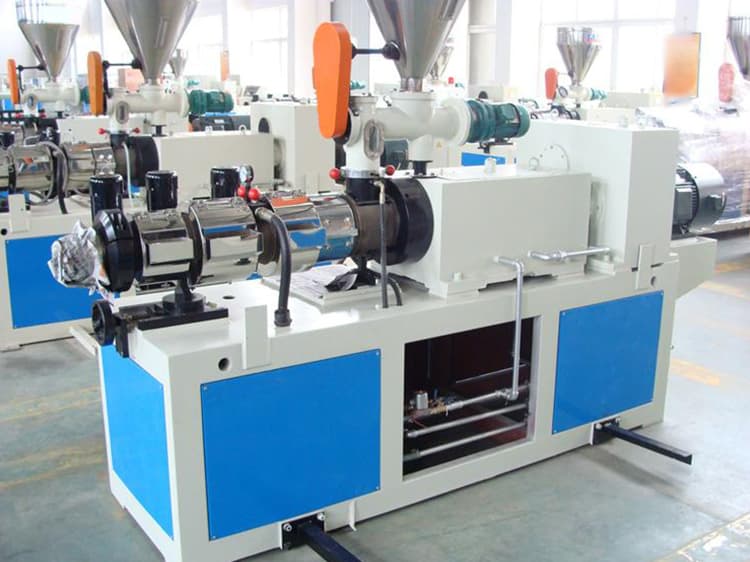
At its core, a single screw extruder works by melting and homogenizing polymer materials through the combined action of heat and mechanical shearing. Imagine a long screw rotating inside a heated barrel—feeding raw plastic pellets in one end and pushing out a uniform molten stream at the other. This continuous flow makes it ideal for compounding engineering plastics that require exact formulations and consistent quality.
The screw itself is the star of the show. Its geometry determines how well materials are melted, mixed, and conveyed. By adjusting the screw design, manufacturers can control everything from melting efficiency to mixing intensity, making it adaptable for different polymers and additives.
Precision in Plastic Compounding
In engineering plastics—like polycarbonate (PC), nylon (PA), or ABS—precision isn’t just a nice-to-have, it’s a must. A small inconsistency in the compound can lead to variations in strength, heat resistance, or color uniformity. That’s where the Single Screw Extruder comes in.
Its simple yet highly controllable mechanism allows for steady temperature profiles, uniform shear rates, and consistent pressure along the barrel. When combined with precise feeding systems and downstream pelletizers, it can produce high-quality engineering plastic granules ready for injection molding or extrusion molding.
Advantages in Efficiency and Maintenance
One of the biggest advantages of using a single screw extruder for compounding is its efficiency and simplicity. Unlike twin-screw systems, which are often more complex and expensive, single screw extruders are easier to maintain, consume less energy, and still provide excellent dispersion for many formulations.
They’re also incredibly versatile. With the right die and process setup, a single extruder can handle a wide range of materials—filled, reinforced, or blended—without the need for frequent equipment changes. That’s why many manufacturers prefer it as a reliable, cost-effective solution for medium-scale plastic compounding.
Driving Innovation in Material Performance
As material science evolves, the demand for more specialized engineering plastics continues to grow. Modern single screw extruders have evolved too, incorporating advanced controls, automatic feeding systems, and precise temperature management. These upgrades make them more than just mixing machines—they’re intelligent platforms for high-performance material production.
Whether you’re producing flame-retardant compounds, glass-fiber-reinforced plastics, or color masterbatches, the Single Screw Extruder remains at the heart of the process—turning raw materials into reliable, high-value products.
Final Thoughts
In short, the single screw extruder may appear simple, but its impact on modern plastic compounding is profound. It offers the perfect blend of consistency, adaptability, and efficiency—qualities that make it indispensable for producing engineering plastics that power industries from automotive to electronics.
So next time you see a sleek car dashboard, a durable gear, or a precise plastic component, remember: behind it all, a single screw extruder was hard at work, turning innovation into reality.